Have you ever wondered why ducks have webbed feet? Why pine trees have needles instead of broad leaves? Or why birds have so many different beak shapes?
Scientists ask questions like these every day. They’re exploring one of the biggest ideas in science: structure and function.
Helping children notice how something is built and think about what it does encourages them to ask questions, make observations, and think like scientists. The best part? You don’t need a science lab or expensive materials. Some of the best science activities for kids happen right in your backyard or on a neighborhood walk.
What Is Structure and Function?
Structure: The part (what it is).
Function: The job (what it does).
Example 1
🥄 Spoon
Structure: A curved bowl attached to a handle.
Function: The curved bowl helps scoop food.
In this example, the entire spoon is the structure.
Example 2
🦆 Duck Foot
Structure: Webbed feet.
Function: The webbing helps ducks paddle through water more easily.
In this example, we’re looking at one part of the duck. Scientists often study individual structures to understand how they help an organism survive.
Once children understand this idea, they’ll begin noticing structure and function everywhere.
Why Do Scientists Study Structure and Function?
Scientists don’t just identify plants and animals. They ask questions like:
- Why is it shaped that way?
- How does it help the organism survive?
- What would happen if that structure were different?
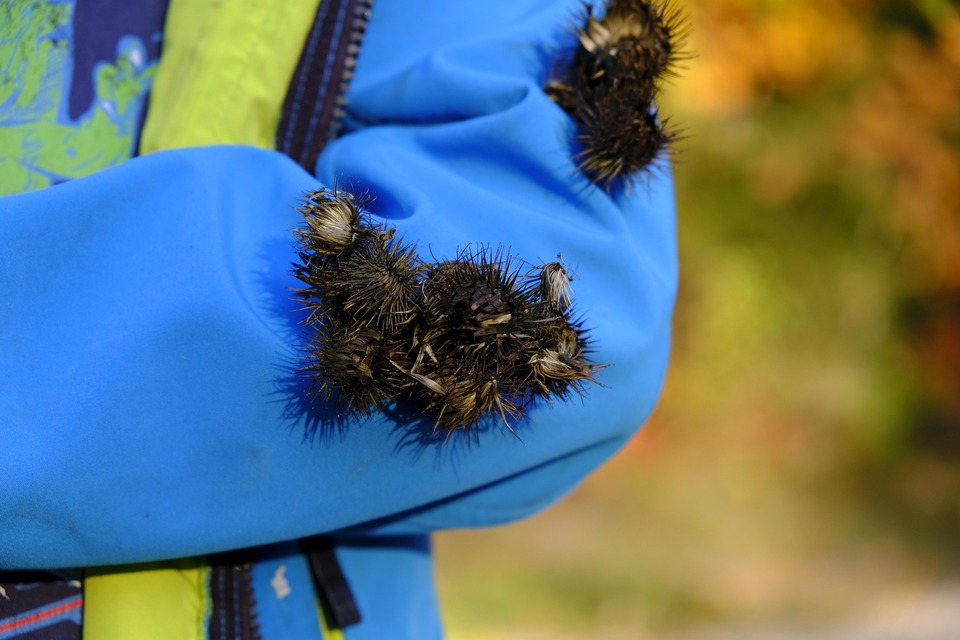
These questions help scientists understand how living things interact with their environments and solve problems. Engineers ask similar questions when they design new inventions. In fact, many inventions are inspired by nature. This field of science is called biomimicry. One famous example is Velcro, which was inspired by tiny burrs that stick to animal fur and clothing.
Whether they’re studying plants, animals, or inventions, scientists are always asking how a structure helps something do its job.
Try a Structure Hunt Outdoors
One of the easiest nature activities for kids is a Structure Hunt. The next time you’re outside, challenge your child to look closely at the world around them.
For each plant or animal they find, ask:
👀 What do you notice?
🧩 What structure do you see?
💡 What do you think it helps it do?
There are no points for getting the “right” answer. The goal is to observe carefully and think critically. Here are a few great places to start.
🦆 Duck Feet
If you visit a pond or lake, look at a duck’s feet.
What do you notice?
How might the webbing help the duck move through water?
🐦 Bird Beaks
Different birds have different beak shapes.
Some are long and narrow. Others are short and strong.
What do you think each beak helps the bird do?
🌳 Tree Bark
Compare the bark on two different trees.
Is one smoother? Is one thicker or rougher?
Why might that be helpful?
🍃 Leaves

Compare a broad leaf to a pine needle.
How are they different?
How might each type of leaf help the tree where it lives?
🌰 Seeds
Look for maple seeds, acorns, burrs, or dandelion seeds.
How are they different?
How might each seed’s shape help it travel or survive?
Activities like these help children develop observation skills while exploring plant adaptations, animal adaptations, and other fascinating examples of structure and function in nature.
How Scientific Thinking Changes as Children Grow
Children don’t learn scientific thinking all at once. As they grow, their observations and explanations become more detailed.
Kindergarten–2nd Grade
Young children are learning to notice differences. Instead of focusing on scientific vocabulary, encourage them to describe what they see. For example, if they compare a duck’s foot and a chicken’s foot, ask:
- What do you notice?
- How are they different?
- What do you think each foot helps the animal do?
Simple conversations like these build observation skills and curiosity.
Grades 3–5
Older elementary students are ready to compare structures and begin supporting their ideas with evidence. For example, compare two different seeds.
Ask:
- How are these seeds alike?
- How are they different?
- How do you think each seed travels?
- What observations support your thinking?
This encourages children to explain their ideas rather than simply making guesses.
Middle School
Middle school students are ready to investigate how structures are specialized for different functions. A great example is comparing different “bird beaks” using tools like tweezers, clothespins, spoons, and chopsticks. Challenge students to pick up different “foods” such as beans, pom-poms, rubber bands, or rice.
Then ask:
- Which “beak” worked best for each type of food?
- Did one beak work best for everything?
- What evidence supports your conclusion?
This helps students understand that different structures are often adapted for different jobs.
Everyday Conversations Build Scientific Thinking
One of the best ways to encourage scientific thinking is by asking questions instead of giving answers.
Try asking:
- What do you notice?
- Why do you think it’s shaped that way?
- What job do you think it does?
- How could we find out?
These simple questions encourage children to slow down, observe carefully, and develop their own explanations. That’s exactly how scientists begin exploring the natural world.
Extend the Learning

If your child enjoys exploring structure and function, here are a few ways to continue learning together.
🎥 Watch the Free Companion Video
In my NGSS Made Simple series, I explain structure and function using real-life examples that families and educators can explore together.
📄 Download the Companion Printable

Continue investigating with printable activities designed for:
- Kindergarten–2nd Grade
- Grades 3–5
- Middle School
Each investigation encourages children to observe, compare, test ideas, and think like scientists.
🧤 Try the Free Blubber Investigation
Discover how blubber helps marine mammals stay warm by completing a simple hands-on investigation. It’s a fun way to explore how a structure can have an important function.
Final Thoughts
The next time you’re outside, slow down and look a little closer. Every leaf, feather, seed, shell, and beak has a story to tell.
By asking simple questions and encouraging careful observation, you’re helping children discover one of the biggest ideas in science while enjoying meaningful outdoor science activities together.
The more children notice, the more they’ll begin asking questions. And that’s where scientific thinking begins.